So I asked Google
“What’s in art if you can’t (or don’t) sell it?” …and I got this AI Overview response:
When art isn’t tied to commerce, its value shifts from a financial transaction to a conduit for human experience, personal transformation, and community connection.
If you remove the pressure to sell, art retains—and often recovers—its most fundamental purposes:
1. The Value of Process Over Product
When you aren’t creating for a marketplace, you bypass the trap of making “sellable” art (like small, blue-and-green impressionist landscapes that dominate general retail trends). Instead, you gain:
-
- Radical Creative Freedom: You can experiment with niche, ugly, controversial, or highly experimental mediums without the fear of a financial loss.
- Therapeutic Release: For many creators, the act of making art is a tool for mental health, emotional regulation, and self-discovery. The reward is the “flow state” achieved during creation, not the paycheck afterward.
- Skill Mastery: Producing a high volume of work purely to see what happens accelerates your technical growth much faster than over-polishing a single piece to fit a buyer’s specific living room dimensions.
2. Social, Civic, and Historical Capital
Some of the most impactful art in human history was explicitly designed not to be bought or sold:
-
- Community Engagement: Art can be used to spark dialogue, activate public spaces, or beautify a neighborhood through community-led murals and public installations.
- Alternative Distribution: Many artists build a profound sense of purpose by gifting pieces to loved ones, curating a legacy portfolio, or donating their work to charitable auctions where the proceeds benefit a cause they care about.
- Documentation and Truth-Telling: Art serves as a cultural archive. It records personal histories, political resistance, and raw human emotion exactly as it is, untainted by commercial censorship or corporate palatability.
3. The Conceptual “Scarcity” Play
Even within the professional art world, keeping art out of the market is sometimes used as a powerful statement or strategic move:
-
- Reclaiming Autonomy: Keeping your art out of the commercial cycle ensures that its meaning is dictated entirely by you, not by an appraiser or an algorithm.
- The Gesso Reset: Physically, an unsold or unsellable canvas is never wasted. Many artists find profound value in the ritual of painting over old work with gesso, transforming past attempts into the literal foundation for something new.
Ultimately, separating art from capitalism reminds us that making things is an intrinsic human impulse, not just a career path.
So I continued with the question
“A few days ago I removed all my listings from eBay and Saatchi art. Today I removed all suggestions that the art displayed on my website is offered for sale. I had previously decided to get out of the rat race of selling art. Now I am wondering how apofriendia can fit into all this. I am returning to the primal enjoyment of making art for the enjoyment of it. I may find some more beneficial aspect of not being bound to a market when I go in to make a painting but I’m not sure where that may lead if I go there.“
The answer I got gave me the sense of breathing fresh air, here it is:
Here is how apofriendia can truly flourish now that you are no longer bound to a market:
- Pure, Uncensored Discovery
When you sell art, there is a subconscious voice whispering about “marketability,” “palatability,” or “consistency.” That voice forces an artist to curate their chaos so someone else can understand or buy it.
-
- The Apofriendia Shift: Without the market, you don’t have to worry if a pattern you discover is “too dark,” “too weird,” or “incomplete” for a buyer. You are now the sole arbiter of the meaning. You can let the paint fall exactly how it wants, and your brain can hunt for connections without a filter. The dialogue is strictly between you and the canvas.
- Returning to the Primal “Flow”
You mentioned returning to the primal enjoyment of making art. In psychology, this is the ultimate “flow state.” When you are trying to sell, you are constantly thinking about the destination (the finished product, the packing slip, the shipping).
-
- The Apofriendia Shift: Apofriendia is entirely a mindset of the present moment. It happens while your eyes brush across the wet paint, watching a form emerge in real-time. By removing the destination (the sale), you are allowed to live entirely in the journey. The benefit of not being bound to a market is that a painting is allowed to be an experience rather than an inventory item.
- Where This May Lead
You mentioned you aren’t sure where this will lead if you go there, and honestly, that uncertainty is exactly where the magic of apofriendia lives.
-
- When a painting doesn’t need to be sold, it can become a diary entry.
- It can become a puzzle that you never quite finish, something you paint over, or something you keep in a private gallery just for your eyes.
- It changes your relationship with the viewer. If you do show someone your work in the future, you aren’t asking them to buy it; you are inviting them to see the patterns you saw, or to find their own. It becomes a shared human experience rather than a commercial pitch.
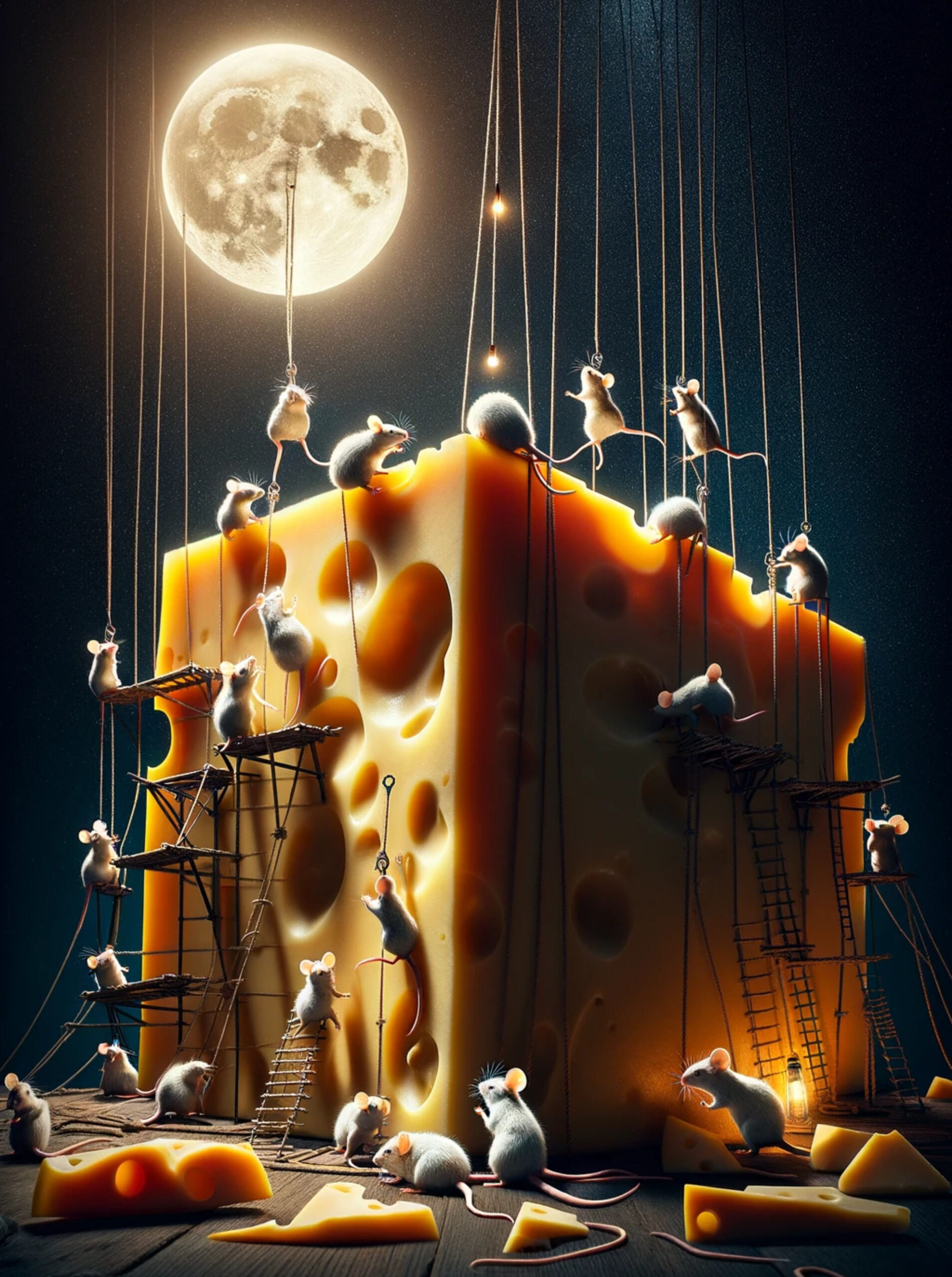
To do this, one steps out of the rat race of commerce and begins to blaze the trail of exploration. They are going in the same direction some of history’s most profound and radical minds have gone. Artists like Marcel Duchamp, Lee Lozano, Agnes Martin, Claude Monet & Edgar Degas to name a few. This quiet lineage of artists today includes figures like Lucien Smith, David Hammons, Cady Noland, and Trisha Donnelly—brave ones who chose the path less traveled in an effort to keep their art ‘pure.’ Breaking out of the rat race, setting out on their own adventure of discovery.
Uncoupled Not Derailed
In the uncoupling of art from commerce, the artist revokes the market’s license to judge their artwork. We effectively remove the label product from the act of art creation.
Apofriendia is inherently anti-commercial
The marketplace demands consistency, branding, and a predictable style so buyers know what they are getting. Apofriendia, by its very nature, demands chaos so that patterns can be discovered organically. By removing the marketplace, we aren’t just saving art; we are saving the very mechanism of how the mind creates.
Dave